The virtue of justice requires not only that we judge others fairly, but also that we judge ourselves fairly. This is no mean feat. The trouble is that if a person is a poor judge of him or herself, it is hard to imagine that person being a good judge of others. Bias toward the self often leads to bias against others. Justice begins within ourselves.
While justice is important for each of us in our personal lives, it becomes strikingly important when we think of those in positions of power. We need leaders motivated by a love of justice and not merely self-aggrandisement. Leadership without an inner moral compass reliably pointing toward justice inevitably ends in the abuse of power.
Philosophically, all virtues are ideals that we can only approach without fully attaining them. So, we can always aspire to do better. Given this, what role does the virtue of justice play in our personal lives? What role ought it to play?
Just people are wise in the ways of fairness, equality, desert and mercy. They are normally pacific. Just people mind their own business, except when they see and call out injustice, speaking truth to power, which they'll do even at a personal cost. Justice questions authority.
Just people also question themselves. This makes them honest and non-self-deceptive. They vigilantly maintain a clear conscience. Just people are cognizant of their own mistakes and faults, and so they are forgiving of others. They respect who they actually are and not whom they merely wish they were, and their authentic self-respect makes them respectful of others. People who are just do as they say and say as they do: their word is their bond. They are capable of great loyalty and fidelity, but not without limit.
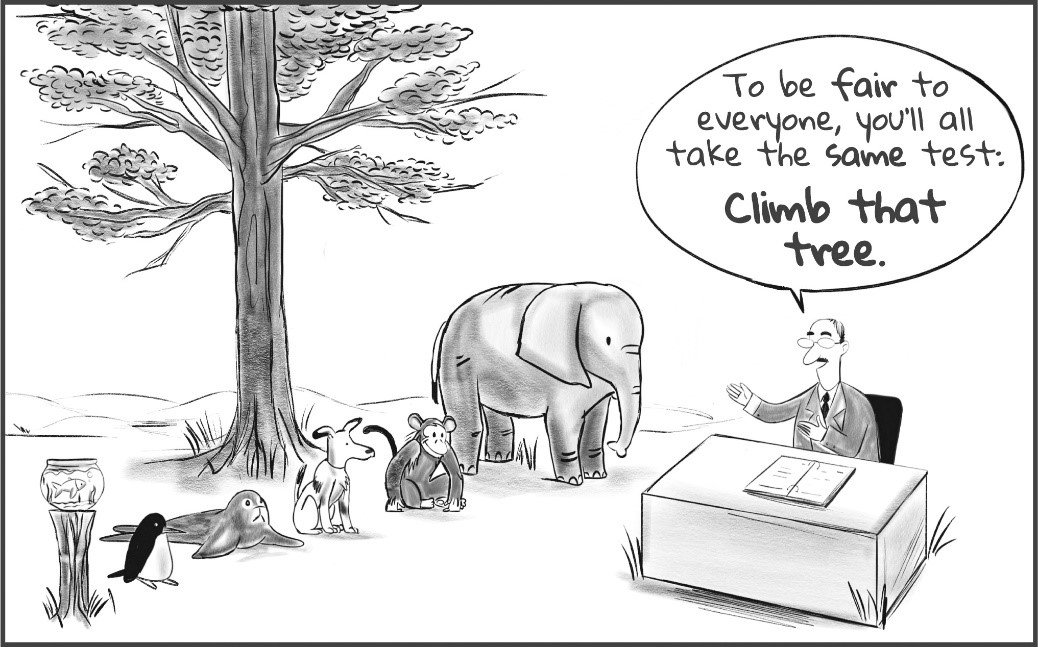
Life is neither just nor fair: Good things happen to bad people and bad things happen to good people. This, however, only increases our obligation to be as just and fair as we can be, to be honest with ourselves as well as others, to try to correct injustice when we see it, and to do as much right in this unfair world as we can.
Before the Law stands a doorkeeper. A man from the country comes to this doorkeeper and requests admittance to the Law. But the doorkeeper says that he can't grant him admittance now. The man thinks it over and then asks if he'll be allowed to enter later. 'It's possible,' says the doorkeeper, 'but not now.' Since the gate to the Law stands open as always and the doorkeeper steps aside, the man bends down to look through the gate into the interior. When the doorkeeper sees this he laughs and says, 'If you're so drawn to it, go ahead and try to enter, even though I've forbidden it. But bear this in mind: I'm powerful. And I'm only the lowest doorkeeper. From hall to hall, however, stand doorkeepers each more powerful than the one before. The mere sight of the third is more than even I can bear.'
The man from the country has not anticipated such difficulties; the Law should be accessible to anyone at any time, he thinks, but as he now examines the doorkeeper in his fur coat more closely, his large, sharply pointed nose, his long, thin, black tartar's beard, he decides he would prefer to wait until he receives permission to enter. The doorkeeper gives him a stool and lets him sit down at the side of the door. He sits there for days and years. He asks time and again to be admitted and wearies the doorkeeper with his entreaties. The doorkeeper often conducts brief interrogations, inquiring about his home and many other matters, but he asks such questions indifferently, as great men do, and in the end, he always tells him he still can't admit him.
Finally, his eyes grow dim and he no longer knows whether it's really getting darker around him or if his eyes are merely deceiving him. And yet in the darkness he now sees a radiance that streams forth inextinguishably from the door of the Law. He doesn't have much longer to live now. Before he dies, everything he has experienced over the years coalesces in his mind into a single question he has never asked the doorkeeper. He motions to him, since he can no longer straighten his stiffening body. The doorkeeper has to bend down to him, for the difference in size between them has altered greatly to the man's disadvantage. 'What do you want to know now?,' asks the doorkeeper, 'you're insatiable.' 'Everyone strives to reach the Law,' says the man, 'how does it happen, then, that in all these years no one but me has requested admittance.' The doorkeeper sees that the man is nearing his end, and in order to reach his failing hearing, he roars at him: 'No one else could gain admittance here, because this entrance was meant solely for you. I'm going to go and shut it now.
In America today many of the basic precepts of liberal democracy are under assault, whether you think the fault lies with the political party you identify with or with members of the other party, civil discourse has been eroded; trust is rare; news and data and facts that run counter to what we want to believe are dismissed as fake; large segments of the population have lost faith in the justice system; we have become a divided people. Studies show that an increasing number of young people around the world and here in America no longer believe that democracy is a good system or that civil liberties are important. They are still a minority but liberal democracy - the kind of democracy that defends free speech, fair elections, a free press, due process, independent courts, is under attack and defending it has now become your responsibility.
You didn't cause this state of affairs - well, perhaps some of you may have helped it along if you're among those too many Americans who have chosen to hang out only with people who think the way they do and only watch programs or read reports that seem to validate what they already think, and deny themselves meaningful interchanges with people who see things somewhat differently - but whether you're the cause or not, you're the potential solution because to ensure justice is now your calling, your responsibility, that's what being a lawyer means.
From now on, it's not about you. It's not just how much money you can make or how much fame you can achieve; you are now among the elite, the people other people look to for leadership, and what you have to grapple with now is not just tort law or criminal defense but what do we as citizens owe to each other. I hope none of you is or becomes a cynic - what you run into in practicing law can do that to you - but I hope you will be a skeptic. That you will think critically-evaluate and question what you hear, look for other points of view, understand where others are coming from. Do not lock yourself into an iron box of preconceptions or a cocoon of like-mindedness. You have been given license to be bold, to think outside the box, to think of the big picture and great causes.
I know you are now entering into one of the busier and most pressing times of your life: preparing for the bar (lawyer exam), imagining a career-private practice, joining a business or government-and there's not a lot of free time on your plate. But when the pressure lifts and you have moments to look elsewhere, I'd suggest that you immerse yourself in those things that make us truly human-not legal briefs or case law or hornbooks but the humanities, art, literature, philosophy, music, poetry. The best lawyers-and the best citizens-are those that are fully human, with insight and compassion and understanding. Justice Brandeis, believing he had made a mistake in a case, explained that he had thought about the question but he hadn't thought through it. Think through the challenges; think deeply; get past the surface.